
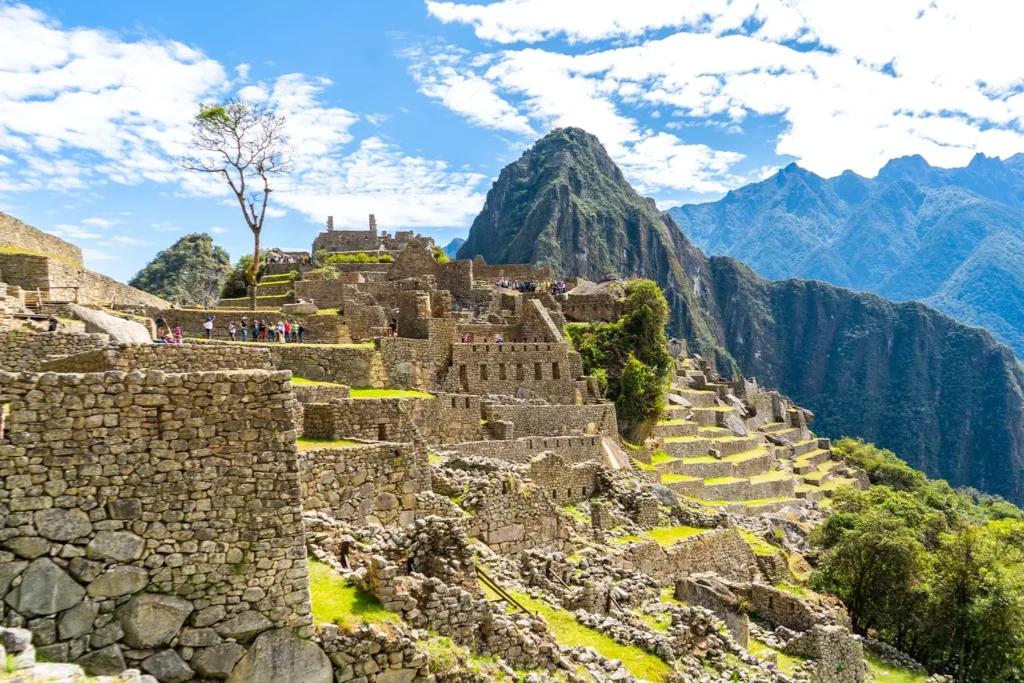
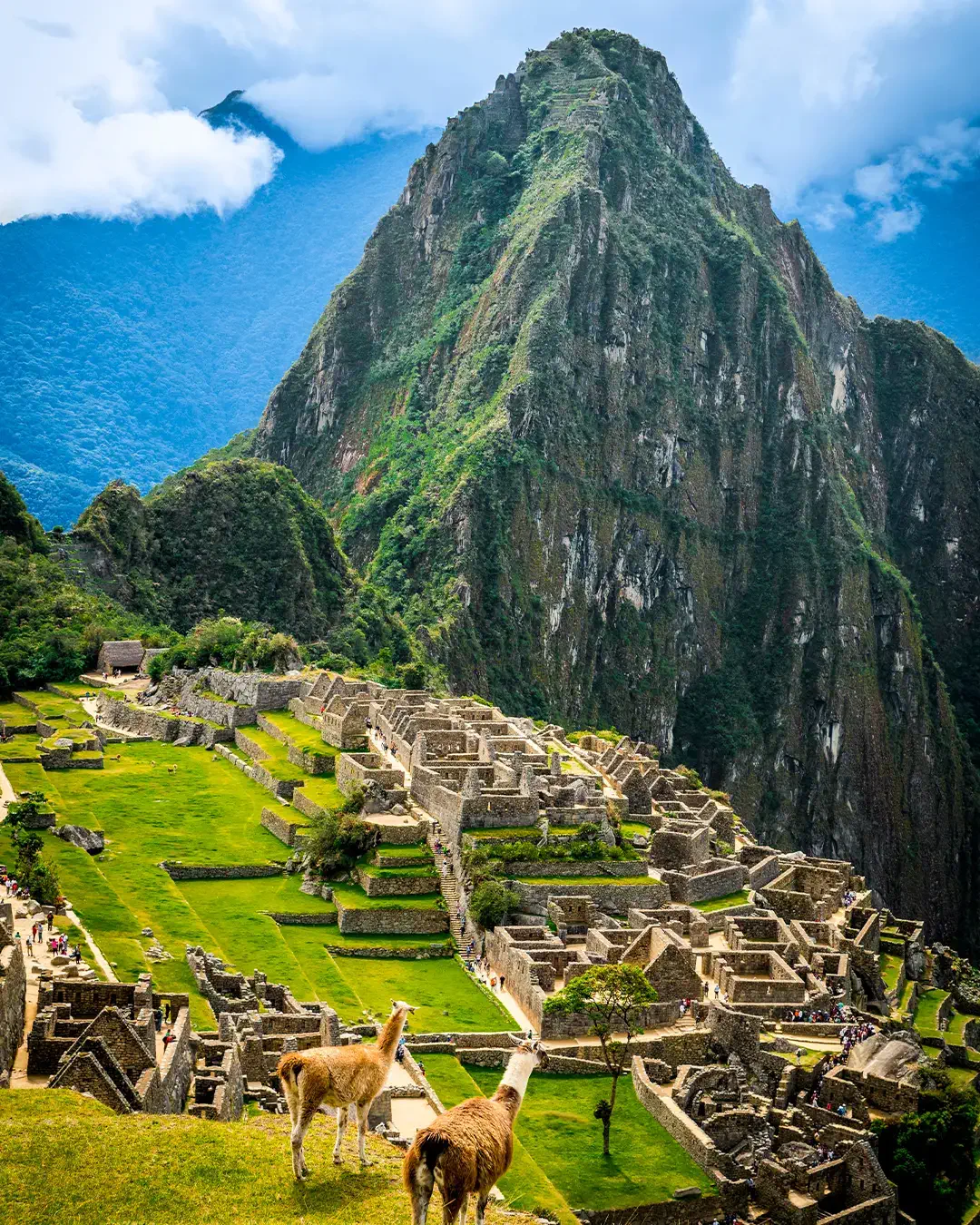
Machu Picchu, the iconic Inca citadel nestled high in the Peruvian mountains, is a destination that fascinates travelers from all over the world. We offer you a comprehensive overview of Machu Picchu, from its history and architecture to how to plan your visit.
Machu Picchu was designed as a royal retreat, a ceremonial center, or possibly a residence for Pachacuti. Its construction demonstrates advanced Inca engineering, with agricultural terraces, and ceremonial and residential structures adapted to the mountainous terrain. The Incas used sophisticated construction techniques, such as the use of precision-carved stones that fit perfectly without mortar. With the arrival of the Spanish conquistadors in the 16th century, Machu Picchu was abandoned and remained hidden in the jungle. Although the Spanish knew of its existence, they did not consider it important, and the site remained in relative obscurity for centuries until 1911, when the American explorer Hiram Bingham "rediscovered" Machu Picchu for the Western world. During his expedition, and with the help of local guides, he reached the citadel and introduced it to the public; his findings helped position Machu Picchu on the world map.
Hiram Bingham rediscovered Machu Picchu for the Western world.
The walls of Machu Picchu reveal that their construction techniques were highly advanced, as they are made of precision-carved stones. The stone blocks are cut to fit perfectly without the need for mortar, a technique known as dry masonry. The stones were carved into polygonal shapes and adjusted precisely to create a solid structure capable of withstanding earthquakes and landslides.
Walls of Machu Picchu
The citadel features several main structures:
Water Channels in Machu Picchu
The site holds great cosmic significance, with the location and orientation of many buildings aligned with astronomical events such as the solstices and equinoxes. The Intihuatana is a prime example of the connection between architecture and solar observation. It features ceremonial structures, temples, and plazas that reflect the Inca worldview, integrating religious and astronomical aspects into daily life.
Intihuatana
Over the years, restoration work has been carried out to preserve the structure and original details of Machu Picchu. Measures have also been implemented to control the impact of tourism and protect the site from erosion and wear, as well as strict rules for visitors to preserve the structures and the natural environment. This includes restrictions on accessible areas and permitted activities.
Conservation Work in Machu Picchu

Recomendado por







Copyright 2025. All Right Reserved | politica de Privacidad & Terminos y condiciones

