
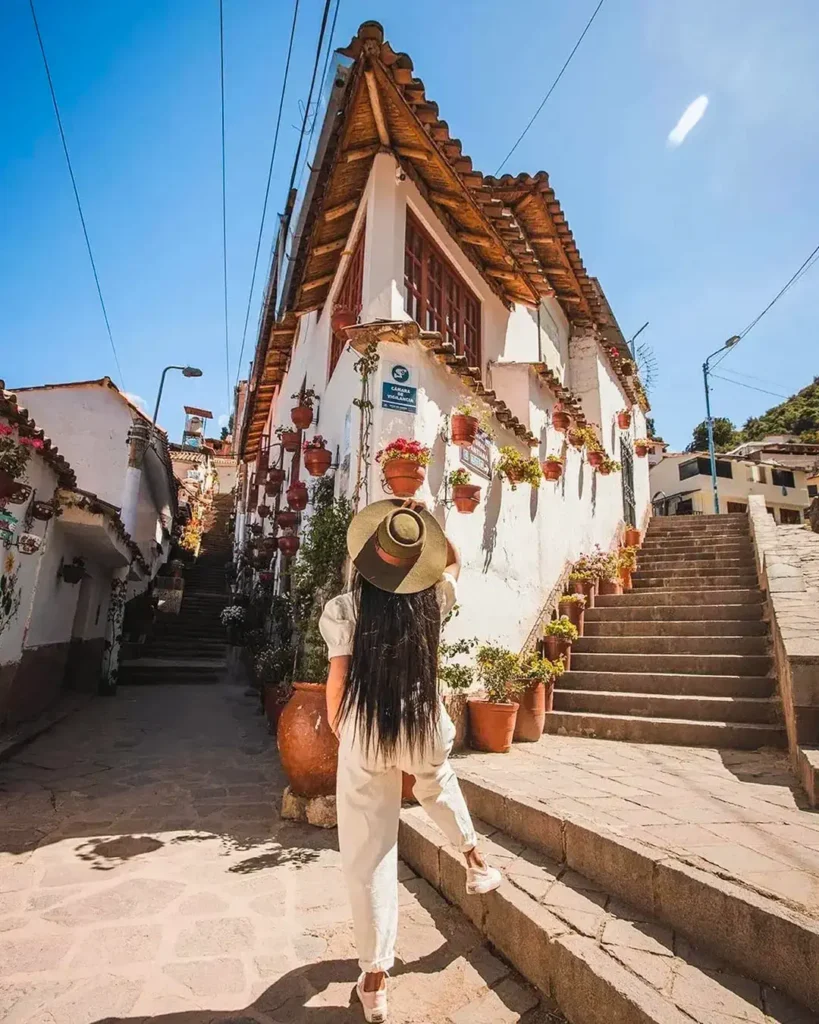
One of the greatest mysteries hidden within the city of Cusco is the enigmatic presence of the number seven, camouflaged among its ancient stone walls and Andean corners.
These streets, which have kept their secrets for over 500 years, are more than just the perfect backdrop for your photographs; they hold an aura of mysticism. For the observant visitor, the number seven reveals a layer of mystery and deep symbolism in the history of Cusco. The impact of the number seven extends beyond its celestial and cultural connotations—it is interwoven into the cultural and spiritual narrative of humanity, from the seven deadly sins and the seven sacraments to the seven musical notes.
If you visit the charming San Blas neighborhood, you will come across a surprising street. There are seven little angels painted on the roof tiles of an old colonial house at the corner of Tandapata and Carmen Alto streets. Although they are small, if you are observant, you will spot them while taking pictures in this picturesque corner.
In the colonial past, the San Agustín convent in San Blas, located on Ruinas Street, was known for having seven windows. Although the convent has changed over time, a city tour of Cusco will give you the opportunity to discover these iconic neighborhoods and provide an excellent introduction to your stay.
Just one block from Siete Angelitos is this street. The seven small devil figures are carved into a stone. Legend has it that the devil appeared here because of the passionate displays of young lovers who frequented this spot.
Located on the steep incline between Pumacurco and Choquechaca streets, this street is also near the Sapantiana Aqueduct. Its name comes from its historical use by muleteers who transported their pack animals up the steep, cobblestone streets of the city. The incline makes it particularly picturesque and one of the best streets for your photography background.
This fascinating street is found before reaching the Nazarenas Square. This pedestrian path gets its name from the 14 snakes carved in stone—seven on each side of the street. Formerly known as Amaru Catta ("Amaru" means snake in Quechua), it is an impressive place where you can admire these wall sculptures.
In the traditional Santiago neighborhood, you will find Calle Siete Mascarones. It earned this name thanks to a man named Mascareñas, who was famous for his copper work alongside his six sons. They manufactured a variety of items, including church ornaments, earning the family the nickname "The Seven Masks."
Finally, just a block from Plaza San Francisco, is Calle Siete Cuartones. This street got its name from the seven large stone beams (cuartones) that once aligned over the old Saphy River willow trees. Although only one remains at the intersection with Saphy Street, the name lives on in Cusco's history.
If you truly want to uncover the secrets of these streets, there is no better way than to hire a professional tour guide. They can lead you to the exact location of each carving, share the detailed legends behind them, and provide a deeper context to the mystical history of Cusco.
Recomendado por






Copyright 2025. All Right Reserved | politica de Privacidad & Terminos y condiciones

