
Discover a temple dedicated to rest and purification. Tambomachay stands as a marvel of Inca hydraulic engineering, where crystal-clear mountain springs have flowed with mathematical precision for over 500 years.
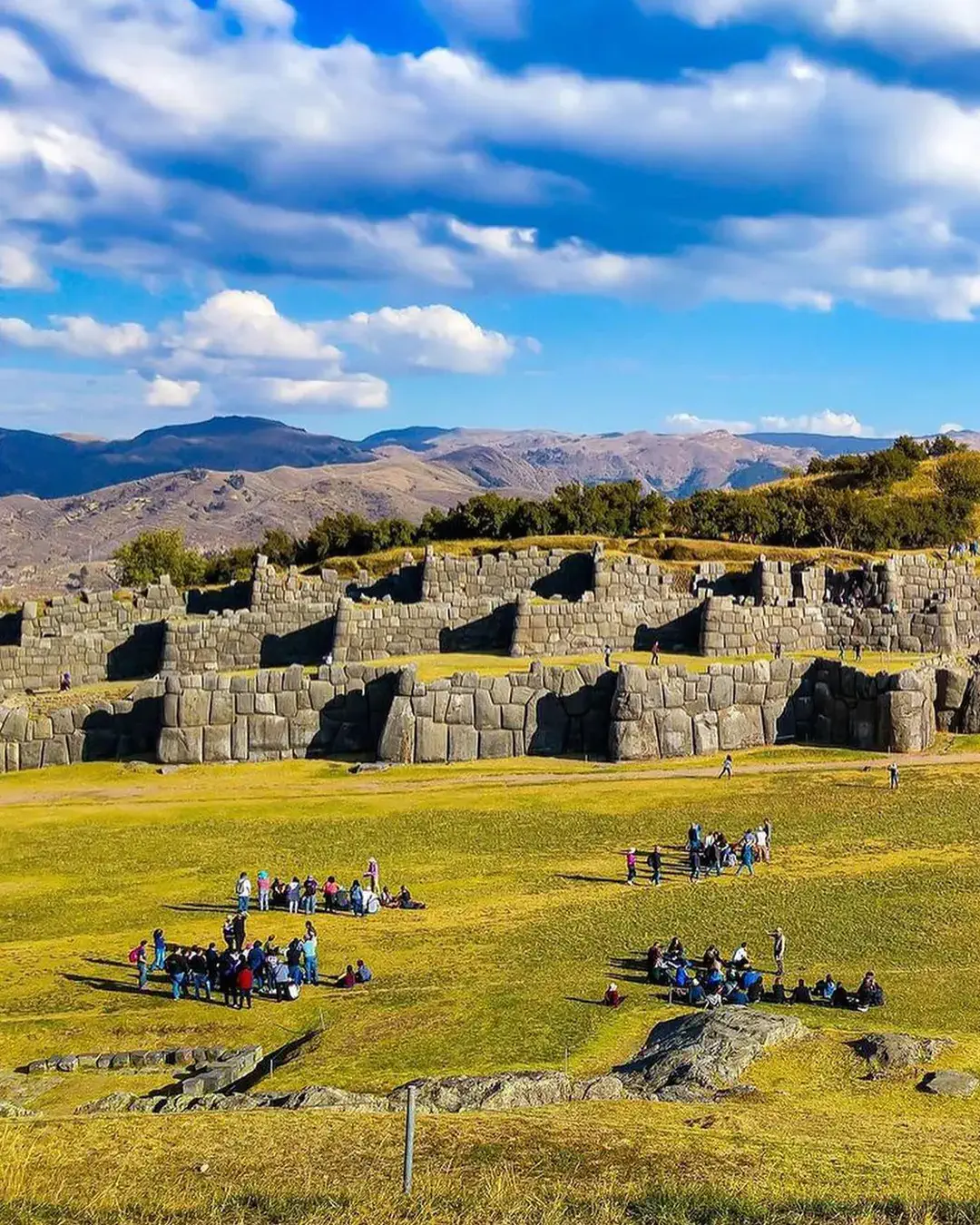
Located in the highlands surrounding Cusco, Tambomachay is an archaeological site that stands out for its architectural elegance and its intimate connection with nature. Unlike the colossal, imposing defensive walls of nearby Sacsayhuamán, this complex features a much more personal, sacred, and peaceful scale.
Popularly known as "El Baño del Inca" (The Inca's Bath), the site consists of beautifully polished stone walls, trapezoidal niches, and finely carved water channels and fountains. As a sanctuary where water flows uninterrupted, it was considered one of the most vital ecological shrines of pre-Hispanic Cusco.
The name Tambomachay comes from the fusion of two Quechua words:
Literally translated as "The Inn of the Cavern" or "Place of Rest", the name references both the local geography—which is nestled in a rocky area rich in natural cave formations—and its historic function as a retreat for spiritual purification and relaxation for the ruling elite of the Tahuantinsuyo empire.
In the Andean worldview, water (Unu or Yaku) was never viewed as a mere natural resource or an engineering utility for irrigation. It was revered as a living deity endowed with a spirit—a supreme symbol of earth's fertility, the purification of the soul, and the origin of life itself.
Tambomachay was built as an ushnu, a sacred altar dedicated exclusively to the veneration of water. Inca priests conducted elaborate ceremonies here, presenting offerings of chicha (sacred corn beer) and mullu (sea shells) to plead with the gods that water would never stop flowing through the empire's valleys, thereby securing agricultural abundance and cosmic balance.
The central core of Tambomachay features an impressive, imperial-style polished stone wall structured into three stepped terraces. On the main platform, Inca engineers captured a natural underground spring and divided it with absolute mathematical precision into two identical channels that pour water symmetrically.
The most astonishing feature of this system is its balance: if you place a glass or container under both waterfalls simultaneously, they will fill to the exact same millisecond with the identical amount of liquid. Despite facing earthquakes and the passage of five centuries, this underground hydraulic mechanism still functions flawlessly, pouring ice-cold, pristine water sourced from high-altitude glacial peaks.
According to 16th-century historical chronicles, Emperor Túpac Yupanqui ordered the construction of this compound to serve as his private retreat for relaxation and purification. The monarch would travel to this valley to hunt Andean wildlife, retiring to Tambomachay at the end of the day.
Here, the Inca took ritual baths in the stone fountains to cleanse his physical body and spirit of worldly energies before journeying back into the sacred city of Cusco. Archaeologists believe the large trapezoidal niches built into the main wall were used to hold the monarch’s royal garments or to display statues of his protective deities during his baths.
Rising directly across from the main water fountains on an adjacent rocky hill sit the remains of a circular watchtower.
Because Tambomachay was a highly restrictive religious area reserved exclusively for the royal family and high priests, general access was strictly forbidden. This watchtower allowed the imperial guard to visually monitor the entire canyon and coordinate security efforts with the nearby military fortress of Puka Pukara, ensuring absolute privacy and safety for the sovereign during his spiritual retreats.
Tambomachay serves as the final stop on the classic Cusco "City Tour" circuit, located roughly 8 kilometers from the city center.

Recommended by







Copyright 2026. All Rights Reserved | Privacy Policy & Terms and Conditions

