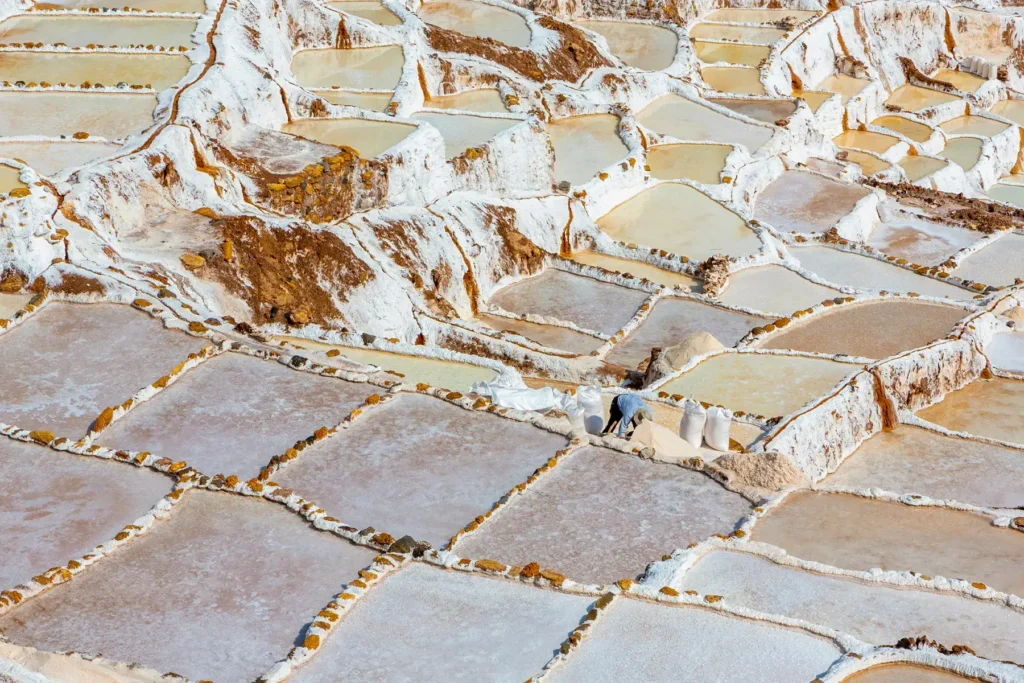
The salt mines of Maras are a fascinating example of how nature and culture intertwine in the history of Peru. Located at 3,000 meters above sea level in the Sacred Valley of the Incas, this site spans 6.8 hectares and features more than 3,000 salt pans that have been utilized for over 2,800 years.
History of the Salt Mines
- Ancient Beginnings: Salt production in Maras dates back to the Wari era—a distinct ethnic group that took advantage of the underground springs long before the Incas arrived in the region. Over centuries, the salt has been harvested using traditional techniques passed down from generation to generation.
- The Cooperative: Today, the salt mines are managed by a cooperative of 633 members. To participate in the operation, each member must own at least four salt pans.
- The Water Sources: The saltwater originates from two underground springs: Orq´opujio and Chinapujio, which feature salt concentrations of 18% and 24%, respectively. This water is distributed through an ingenious system of hand-crafted channels, ensuring every pan receives the resource needed for production.
- Cultural Legacy: Beyond being an economic resource, Maras is recognized as part of the Intangible Cultural Heritage of Peru, reflecting its continuous importance to the local community.
The Origin of the Pink Salt
The famous "pink salt" gets its unique coloration from the minerals provided by the natural spring water and the local clay soil. The water that forms these salt crystals originates from two springs located between 800 and 1,000 meters deep, emerging at a warm temperature of 30°C.
The Artisanal Harvesting Process
The intense Andean sun evaporates the water, leaving behind salt crystals ready to be harvested. This production cycle relies on specific steps and seasonal shifts:
- Peak Season: Harvesting takes place during the dry months, from June to November. During this window, lack of rain allows thick salt layers to form, turning the pans a clean, brilliant white.
- The First Layer (Pink Salt): Men and women dressed in traditional clothing and white boots carefully scrape the top layer of salt. They move in straight lines, carefully dragging their feet to lift the first crystals without mixing them with the clay soil at the bottom.
- Processing: Women use two wooden boards to pile the salt into mounds. Men then transfer it into baskets to wash it, drain excess water, and take it to small drying areas next to the pans. This initial layer yields the prized pink salt.
- The Second Layer (Red Salt): Once the pink salt is cleared, harvesters work the second layer, known as red salt. This salt is set aside for alternative uses, specifically for medical, mining, and agricultural/livestock purposes.
- Yield: The entire harvesting process for a batch takes between two and four days depending on the weather. Annually, Maras yields around 1,000 tons of salt, which is meticulously cleaned and sorted into fine, medium, and coarse grain sizes.
Uses and Health Benefits
Maras salt is highly valued in culinary spaces and natural treatments for its distinct flavor and unique nutritional makeup:
- Low Sodium: It contains less sodium chloride compared to standard table salt, making it a highly beneficial alternative for individuals suffering from high blood pressure.
- Mineral-Rich: It is naturally enriched with essential minerals like calcium, iron, magnesium, and zinc.
- Therapeutic Properties: It is widely recognized for having natural healing and anti-inflammatory properties.
How to Visit the Maras Salt Mines
- Transportation: It is highly recommended to book your visit through a travel agency, as there is no direct public transportation to the site. Most agencies offer day tours that pair Maras with the nearby circular terraces of Moray, making it an efficient way to explore the Sacred Valley.
- Best Time to Visit: The ideal time to go is during the dry season between April and October. The clear, sunny skies during these months maximize water evaporation, ensuring the salt pans are fully active and visually striking.
- Entry Fees: The independent entrance fee to the salt mines is approximately 20 soles for international tourists and 15 soles for Peruvian citizens. Since most tours depart in the morning, booking your spot in advance is highly recommended.