
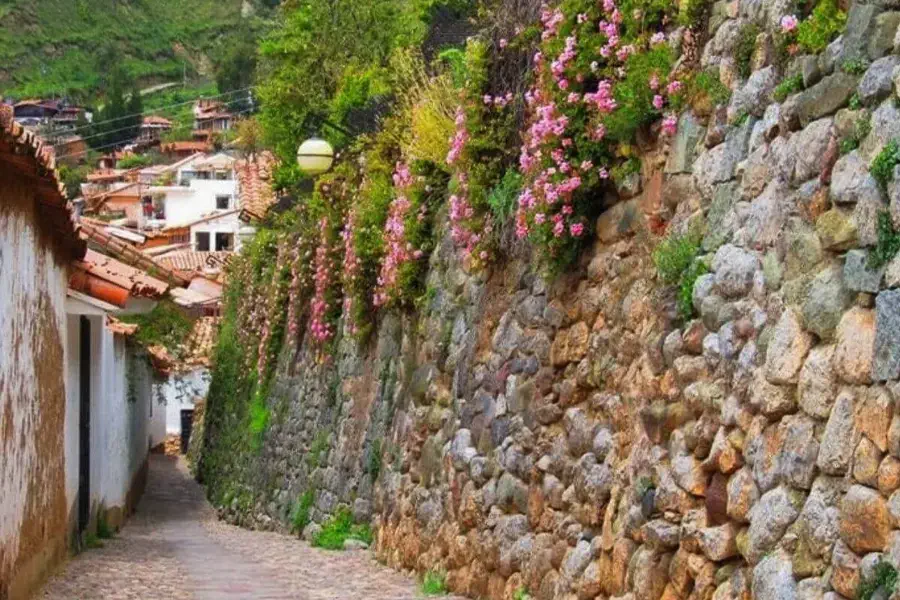
Cusco, the majestic imperial city, does not only dazzle with its landscapes and archaeology but also through the legacy of its streets. Each of them holds stories that combine history, culture, and unique facts, spanning from Inca times to the modern era. Below, we explore some of the most iconic ones:
This street houses the ancient Palace of Inca Roca, whose remains blend with colonial and republican structures, forming what is now the Archbishop's Palace. Its main highlight is the famous "Twelve-Angled Stone," a rock carved with incredible precision that weighs around 6 tons. Although there are stones with more angles in Cusco, this one stands out due to its size and the perfection of its carving, becoming a symbol of Inca architecture. The walls are made of igneous diorite, a highly resistant stone with magnetic properties that some believe provides energy to those who touch it.
Loreto Street, also known as Intikijllu or the "Sun Alley," is one of the most iconic and transited passages in the historic center of Cusco. This narrow alley, flanked by imposing Inca walls, connects the Plaza Mayor with other important points in the city, providing a unique experience for those who walk it.
Resbalosa Street, known for its steep slope and cobblestone ground, connects to San Cristóbal Square. Its Quechua name, Sikitakana, refers to the risk of falling due to how slippery the pavement can be, especially when wet. According to oral tradition, a mestizo named Agustín Ruelas lived in one of the houses on this street and used to stir up arguments among neighbors using satirical nicknames. Today, the street remains famous for its history and its proximity to the San Cristóbal viewpoint, which offers spectacular views of Cusco.
Suecia Street, as it is known today, actually has a humbler origin. Its original name was Calle Sucia (Dirty Street), a name that reflects its past during the colonial and republican eras. In those times, Cusco was a major trading center, and due to the arrival of people from different provinces, the street became crowded with pack animals such as horses, mules, llamas, and alpacas. These animals were tied up on the street while their owners carried out errands in the city. As a result, the street turned into a dunghill, especially during Holy Week and Corpus Christi celebrations when the influx of people and animals increased.
Purgatorio Street (Purgatory Street), a narrow alley in Cusco, owes its name to a popular legend. Following the death of an elderly woman, it was said that her soul haunted the area, causing supernatural phenomena. Her son, a tax collector named Colmenares, took advantage of the fear and rumors by disguising himself in a black robe and a skull. He would go out at night to collect alms under the pretext of helping the "souls in Purgatory". This act of popular superstition solidified the name of the street, which endures today as a symbol of the fusion between tradition and human ingenuity.
The name of Ceniza Street (Ash Street) comes from a tragedy that occurred in 1719, when a terrible plague—now known to have been cholera and yellow fever—struck Cusco, causing over 90 deaths a day. Amid the panic, Doña Teófila Barrio de Mendoza, a pious woman, advised her neighbors to ask the church sacristans for ash, the same kind used for the imposition of the cross every Ash Wednesday. Tradition held that drawing two crosses with ash on the doors would protect them from the plague. The neighbors followed her advice and, according to legend, were saved from contagion. Additionally, it is said that piles of ash were scattered daily over the blood of the infected, intensifying the belief that this street had been blessed. Thus, it became known as Calle de la Ceniza.
In the colonial era, this street received its name from a field (pampa) that housed a gallows, which had been moved from the Plaza de Armas at the request of Bishop Fray Vicente de Valverde. Its original name was actually “Pampa del Castigo” (Field of Punishment) or “Pampa donde se llora” (Field where one weeps), referring to the suffering of the Quechua people who were subjected to cruel punishments for attempting to preserve their customs. This space served as a stage for executions and public punishments, including floggings and beheadings.
One of the busiest streets in Cusco, Marqués Street connects directly with the Plaza Mayor. In Inca times, this street was the main entrance to the Huacaypata (now known as the Plaza de Armas), standing out for its ceremonial and urban importance.
Located next to the imposing Cusco Cathedral, this cobblestone street is a portal to the historical past of the imperial city. Its importance lies in its connection to both the Inca and colonial eras, reflecting the cultural transformation of Cusco over the centuries.
The Cuesta de San Blas, one of Cusco's most iconic streets, begins at Choquechaca Street and culminates at the emblematic Plazoleta de San Blas. This steep slope, with its cobblestone path and colonial mansions, offers spectacular views of the city and an atmosphere that captivates visitors from all over the world.
The Cuesta de San Blas is a magical place both by day and by night. During the day, the sun highlights the charm of its cobblestone streets and colonial architecture. At night, the city lights, contrasting with the starry sky, create a romantic and special atmosphere.
Each of these streets is a living testimony to the cultural and historical richness of Cusco. Walking through them is a journey through the centuries, amidst myths, legends, and traditions that still resonate in their stones.
Recommended by







Copyright 2026. All Rights Reserved | Privacy Policy & Terms and Conditions

