Huayna Picchu vs. Machu Picchu Mountain: Which is the Best Extra Hike?
Huayna Picchu vs. Machu Picchu Mountain: Which is the Best Extra Hike? Discover the differences between the mountains that surround the Inca citadel. Compare their difficulty, views, hiking times, and routes to choose your ideal adventure. Why Climb an Additional Mountain? Visiting the citadel of Machu Picchu through the regular circuits is a transformative experience […]
Huayna Picchu vs. Machu Picchu Mountain: Which is the Best Extra Hike?
Discover the differences between the mountains that surround the Inca citadel. Compare their difficulty, views, hiking times, and routes to choose your ideal adventure.
Why Climb an Additional Mountain?
Visiting the citadel of Machu Picchu through the regular circuits is a transformative experience on its own. However, for more adventurous travelers and hiking enthusiasts, the Ministry of Culture offers combined tickets that allow you to climb the mountain peaks guarding the archaeological sanctuary.
Climbing one of these mountains gives you a completely different aerial perspective of the ruins and lets you walk along original Inca trails that defy gravity. There are currently three main options, each with distinct characteristics, requirements, and views.
The Three Mountain Peaks
Huayna Picchu: The Famous "Stairs of Death"
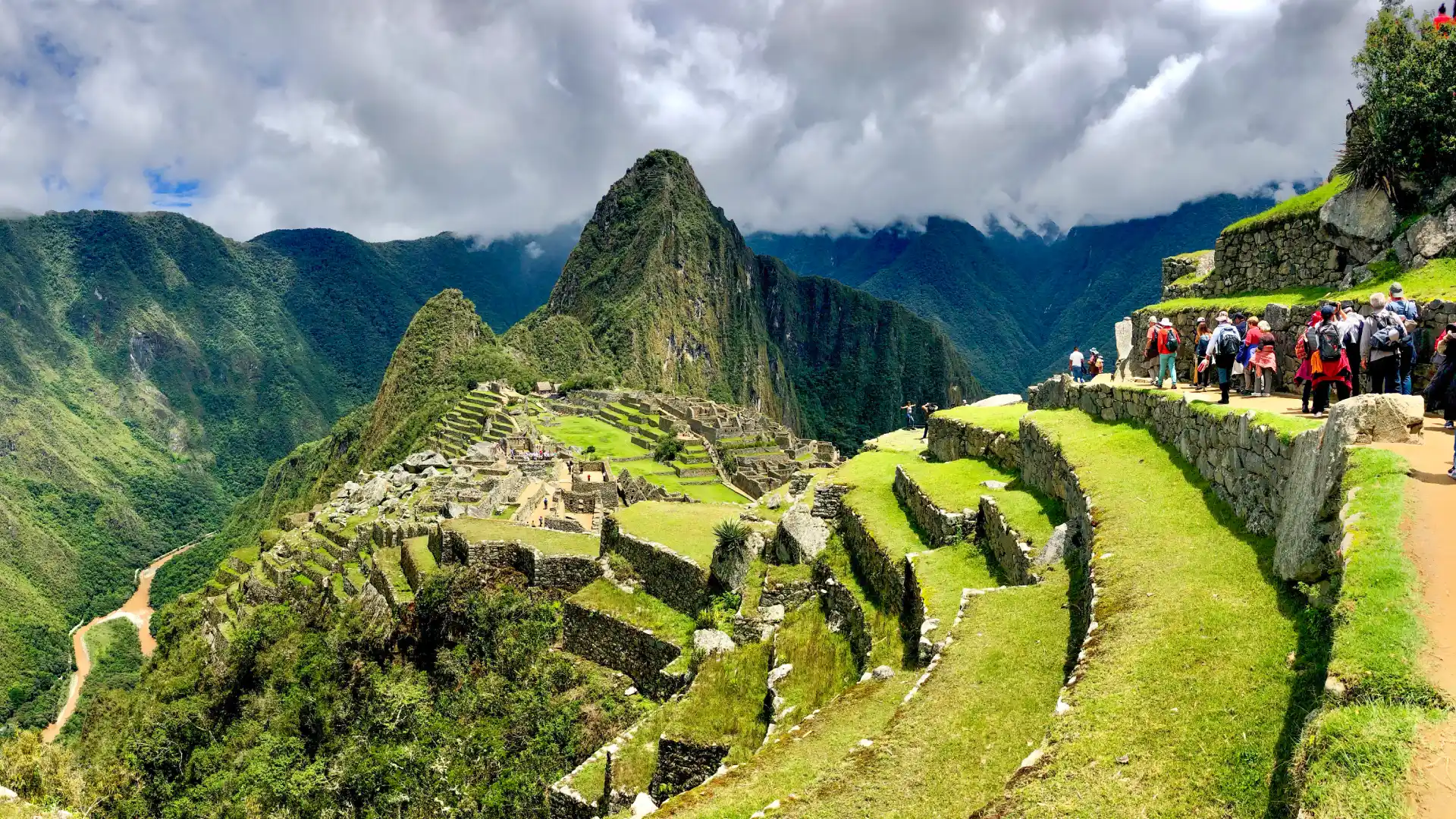
The Peak: Huayna Picchu ("Young Mountain") is the iconic, pointed peak that appears in the background of the classic Machu Picchu photograph. It is the most famous and highly sought-after hike in the region.
The Trail: The path is extremely narrow, steep, and dizzying, built right on the edge of cliffs that drop down to the Vilcanota River. It features a section of nearly vertical stone steps popularly known as the "stairs of death" (though no one has died there, the slope commands great respect).
Unique Features: In addition to the adrenaline rush, the summit houses agricultural terraces and the fascinating Temple of the Moon (or Great Cavern), a hidden sanctuary inside a natural cave.
Machu Picchu Mountain: The Highest and Most Panoramic Summit
The Peak: Located on the opposite side of Huayna Picchu, Machu Picchu Mountain ("Old Mountain") is the peak that gives its name to the entire citadel. At 3,082 meters above sea level, it stands nearly 400 meters higher than Huayna Picchu.
The Trail: Its paths are wider, less exposed to precipices, and have a more gradual, though constant, incline. The route features abundant flora, including dozens of orchid species.
Unique Features: The ultimate reward at the summit is a 360-degree panoramic view. It allows you to see the miniature citadel, the winding river, the entirety of Huayna Picchu, and the snow-capped peaks of the Vilcanota mountain range in the distance.
Huchuy Picchu: The New Short Alternative
The Peak: Recently introduced as a new detour route, Huchuy Picchu ("Little Mountain") is a lower-altitude summit adjacent to Huayna Picchu.
The Trail: This hike is a condensed and much gentler version of hiking in the sanctuary. The path consists of original stone staircases, but the ascent is short and direct.
Unique Features: It is the perfect choice for those who want the experience of climbing an Inca mountain but lack the time, energy, or physical condition required for the two major routes.
Face-to-Face Comparison
Feature
Huayna Picchu
Machu Picchu Mountain
Huchuy Picchu
Difficulty Level
Medium-High: Requires agility; you must use your hands and hold onto steel cables on the steepest steps.
High: The most physically grueling; a test of pure cardio endurance due to endless steps and higher altitude.
Low-Medium: A light hike; anyone with normal mobility can complete it without major exhaustion.
Photographic Views
Close & Vertigo-Inducing: Offers a steep, top-down view of the citadel; you can clearly see the shape of the condor formed by the layout of the city.
Distant & Broad: The citadel looks small, but the entire landscape is majestically overwhelming, capturing the cloud forest and the Andes together.
Short-Range Perspective: A condensed version of the sanctuary views, close to the main ruins.
Ascent Time
45 to 60 minutes.
1.5 to 2 hours.
15 to 20 minutes.
Total Round-Trip Time
2 to 2.5 hours.
3 to 4 hours (will take up most of your morning).
45 minutes to 1 hour.
Ticket Availability
Sells out fastest in Peru. Requires 3 to 4 months advance booking for high season (May–Sept); 400 daily spaces.
Sells out 4 to 6 weeks in advance; 400 daily spaces.
Usually enjoys higher availability on short notice.
Restrictions and Safety Rules
Vertigo and Acrofobia: If you suffer from a fear of heights or severe vertigo, Huayna Picchu is completely discouraged, as the cliffside trails can trigger panic attacks. Machu Picchu Mountain is psychologically much safer in this regard.
Age Limits: Access to Huayna Picchu is strictly restricted to individuals over 12 years old. Machu Picchu Mountain has no strict minimum age limit, but taking very young children is discouraged due to the physical exertion.
What to Pack for the Mountain Hikes
Unlike the flat walks through the ruins, climbing these peaks requires specific gear:
Mandatory Trekking Footwear: The polished Inca stones are extremely slippery, especially in the humid jungle environment. City sneakers or smooth soles are dangerous.
Hands-Free Policy: You will need both hands to hold onto walls and safety cables. Carry a small, body-hugging backpack ("daypack") and store your camera. Tripods are forbidden, and trekking poles are banned unless they have rubber tips and you can prove physical need (seniors or individuals with a disability).
Maximum Hydration: Bring at least 1.5 liters of water per person. Once you begin the climb, there are no shops, restrooms, or water refill stations until you exit the complex.