


Compare times and prices, and choose the route that best suits your adventure.
Getting to Machu Picchu is not as simple as taking a single bus from the city of Cusco. Due to its remote location, nestled in the cloud forest mountains, the citadel does not have direct roads. This forces travelers to choose between different methods of transportation that combine vehicles, trains, and, in many cases, hikes.
It is important to analyze your options in advance, as your choice will depend entirely on three factors: your budget, your available time, and your physical endurance level.
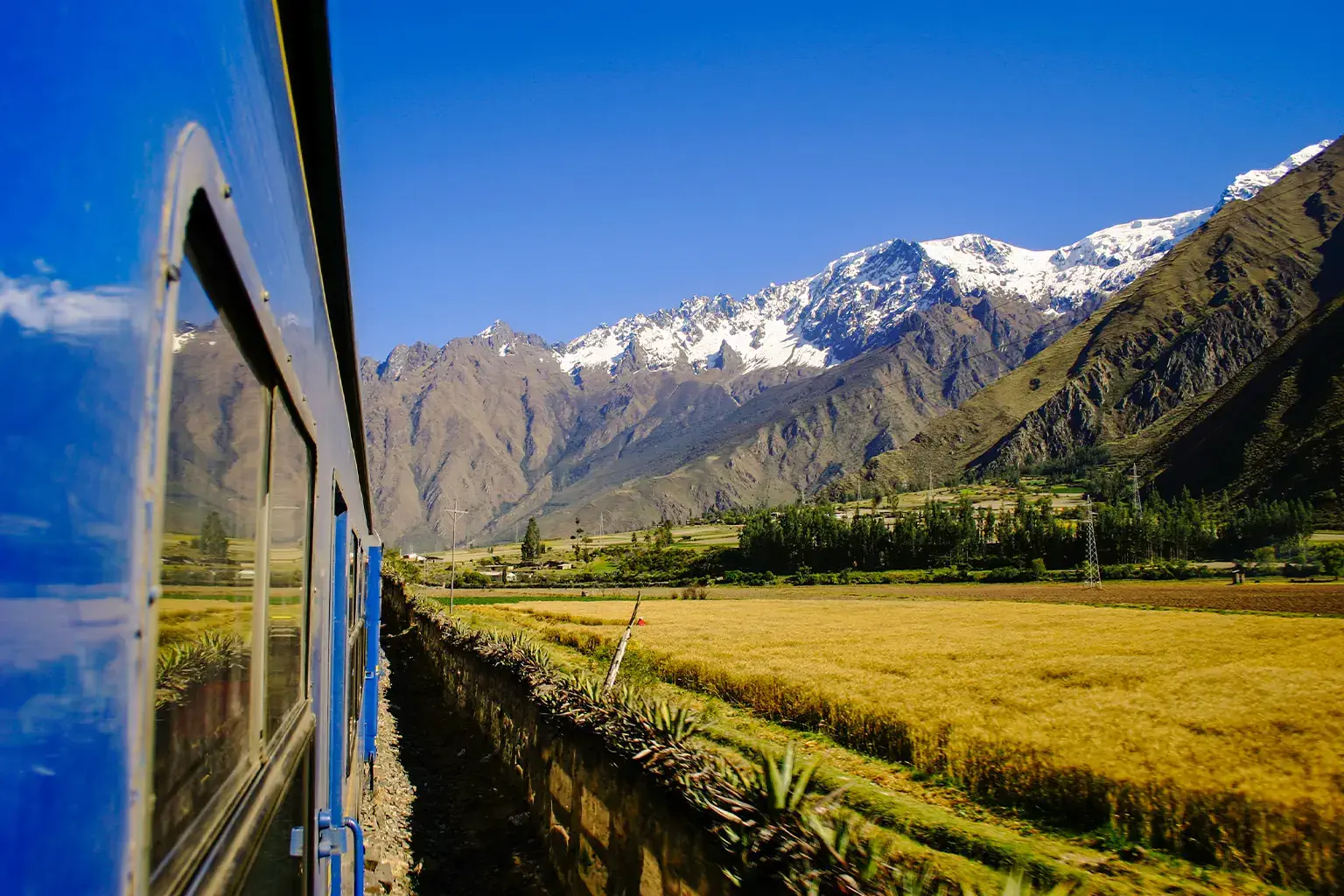
This is the preferred option for 80% of visitors. This journey begins by boarding a train in the Sacred Valley (usually at the Ollantaytambo station) and ends at the Machu Picchu Pueblo (Aguas Calientes) station. The trip takes approximately 1 hour and 45 minutes and offers spectacular views of the Vilcanota River canyon through panoramic windows.
It is the ideal alternative if you are traveling with children, seniors, or if you have a tight itinerary of just a few days. Remember that train tickets usually sell out almost as fast as entrance tickets to the citadel, so it is vital to buy them months in advance.
To arrive by railway, there are only two authorized companies. Both offer excellent and safe service, but they have different categories:
IncaRail: Its main competitor. It offers services like The Voyager, The 360° (with an open-air observation car), and The First Class. Additionally, they usually offer a "Bimodal" service, which includes bus transfers from the city of Cusco to Ollantaytambo.
PeruRail: It is the oldest operator. It has several categories such as the Expedition train (economical), Vistadome (panoramic windows and a cultural show), and the luxurious Hiram Bingham, which includes a gourmet dinner and a bar car. Its departures are the most frequent.
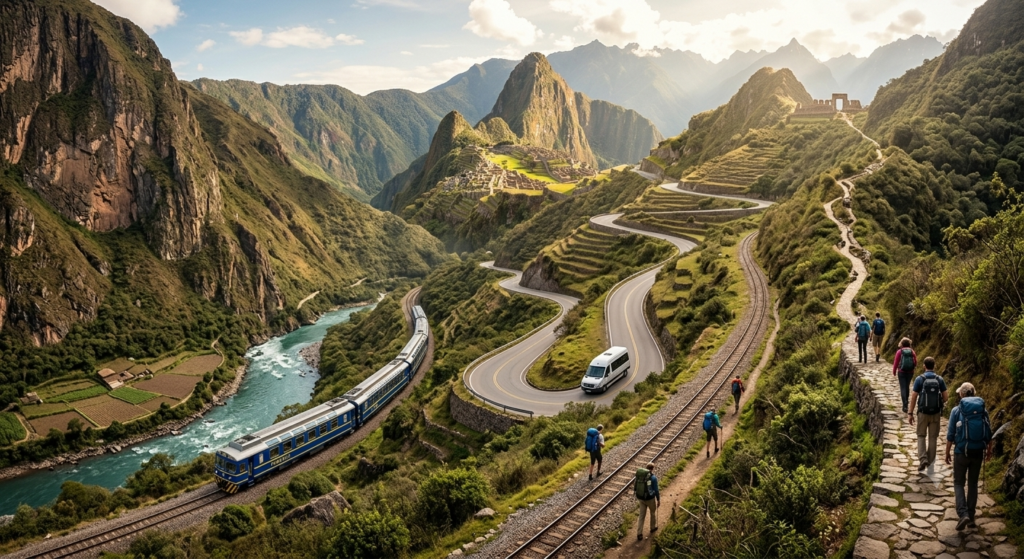
Known as the "Amazon Route," this is the favorite option for backpackers and budget travelers. It consists of a minivan trip from the city of Cusco to the Hydroelectric Plant sector; a winding 6 to 7-hour journey that crosses the Abra Malaga pass and descends into the edge of the jungle.
Once at Hidroeléctrica, travelers must undertake a flat hike of approximately 10 kilometers (between 2 and 3 hours) alongside the train tracks until reaching Aguas Calientes. Although it is much cheaper than the train, it requires at least two full days to safely complete the round trip.
If you are looking for the original experience, this route is the only one that allows you to enter the citadel directly on foot through the Sun Gate (Inti Punku), just as the Incas did. It is a 4-day, 3-night camping trek that covers 43 kilometers of cobbled paths, crossing mountain passes at over 4,200 meters of altitude and visiting exclusive ruins along the way.
The Peruvian government strictly limits access to only 500 people per day (including guides and porters). Therefore, it is essential to reserve your spot through an authorized agency about 6 to 8 months in advance.
If you ran out of permits for the Inca Trail or are looking for more natural landscapes, these treks are perfect:
If you bought your train ticket departing from Ollantaytambo (almost 2 hours from Cusco) or Poroy (30 minutes away), you will need ground transportation to get there. The most common and economical way is to take the colectivos (shared vans) or minivans that leave from Pavitos Street in the center of Cusco.
You can also opt for private taxis if you prefer more comfort and want to manage your own schedule. Be sure to calculate travel times well and arrive at your station at least 30 minutes before your train's departure.
Once you arrive in Machu Picchu Pueblo (either by train or walking), you will find yourself at the base of the mountain. To go up to the entrance gate of the ruins, the Consettur company operates a fleet of ecological buses that climb the winding Hiram Bingham road.
The trip takes 30 minutes. You can buy these tickets in person in Aguas Calientes or online. If you prefer to avoid paying for this bus, you can walk up through stone steps; an intense physical effort that takes between 1 and 1.5 hours, recommended only if you are in good physical shape.
It is crucial to know that train companies have strict luggage policies. Generally, you are only allowed to board with a backpack or handbag that does not exceed 5 to 8 kilograms (11 to 17 pounds). There is no space for large or wheeled suitcases in the train cars.
If you are traveling with large luggage for the rest of your stay in Peru, the standard recommendation is to leave your main suitcases in the storage room of your hotel in Cusco or the Sacred Valley. Hotels offer this luggage storage service for free, allowing you to take only the essentials for your days in Aguas Calientes.
Throughout your entire route to Machu Picchu, you will encounter multiple checkpoints. It is mandatory to present the original passport or official identity document (ID card) that you used to make all your reservations. Photocopies are not accepted.
Final note: This document must exactly match the data printed on your train and bus tickets, and above all, on your official entrance ticket to the Machu Picchu citadel. Otherwise, authorities will deny you access at the checkpoints.


Recommended by







Copyright 2026. All Rights Reserved | Privacy Policy & Terms and Conditions